
Skip to content
  • Home
  • AHSA
    • AHSA Inc. Meetings
    • AHSA Inc
      • AGM 2022
    • AHSA (NSW) Inc.
    • AHSA (QLD) Inc.
    • Privacy Policy
    • Disclaimer
  • Publications
    • Aviation Heritage
    • Aviation Heritage Web Archive
    • AHSA Newsletter Archive
  • Members
    • Members Only
  • Books
  • Join
  • Links
  • Store
  • Log In
    • My Membership Account
Aviation Historical Society of Australia
  • Home
  • AHSA
    • AHSA Inc. Meetings
    • AHSA Inc
      • AGM 2022
    • AHSA (NSW) Inc.
    • AHSA (QLD) Inc.
    • Privacy Policy
    • Disclaimer
  • Publications
    • Aviation Heritage
    • Aviation Heritage Web Archive
    • AHSA Newsletter Archive
  • Members
    • Members Only
  • Books
  • Join
  • Links
  • Store
  • Log In
    • My Membership Account

Australian aviation history digital archive

DerekB30/11/202223/11/2024

In its mission to preserve and promote Australia’s aviation heritage, the AHSA hosts the following digital archives. Click on the image to go to the selected archive.

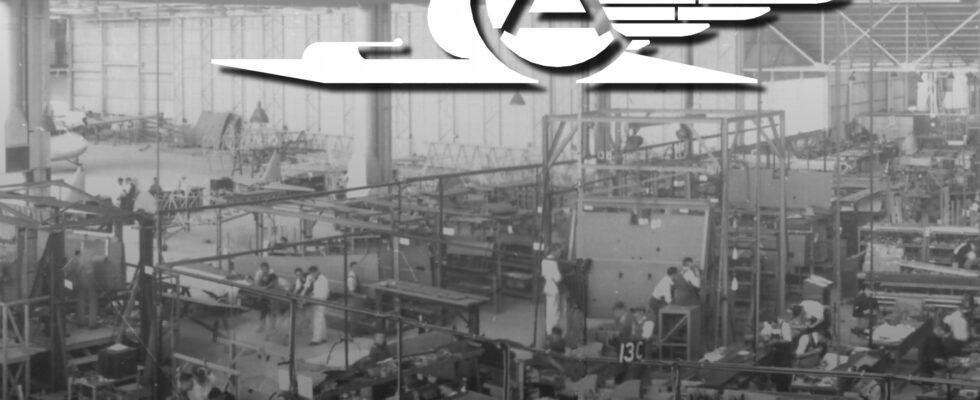
CAC Factory Reports 1937 – 1943
  • Twitter
  • Facebook
  • Google+
  • Linkedin
  • Email
Posted inArchives
Tagged CACCAC BoomerangCAC Wackett TrainerCAC WirrawayCAC WoomeraLawrence Wackett

Welcome to the website of the Aviation Historical Society of Australia Inc.
The AHSA is dedicated to recording and promoting Australian aviation history. We find and tell the stories of how aviation (both civil and military) has contributed to the development of Australia and the experiences of Australian people.
To navigate around the site, select from the menu bar above, click on one of the updates below or choose one of the categories below.

On this day in Australian aviation history:

1942 In a freak accident, a young girl and her horse were both killed when a USAAF Kittyhawk attempted to take off from a field near Nowra, NSW on 10 March 1942. Second Lieutenant Joseph H. King had made a forced landing in his P-40E Kittyhawk the day before. Following repairs to the aircraft, on Tuesday 10 March 1942 a small crowd gathered to watch 2nd Lt. King attempt to take off from the field. During his take-off run the left wheel hit a hole in the uneven ground causing the aircraft to swerve violently to the left. It crashed into a timber fence, and struck 18 year old Daphne May Woods, and the horse that she was sitting on, along with six year old John Hogan. Sadly Daphne and her horse were killed instantly and John Hogan sustained severe head injuries and was admitted to Edman Private Hospital in Nowra in a serious condition. Source: National Advocate (Bathurst, NSW), Wednesday 11 March 1942, via Ozatwar.com website.
1945 No 201 Flight was formed at RAAF Station Laverton on 10 March 1945 as radio and radar experimentation unit. The flight was intended to use modified B-24 Liberator bombers to determine the characteristics of Japanese radar stations so that they could be effectively attacked by Allied aircraft. Sources: Nelmes, Michael V. (1994). Tocumwal to Tarakan. Australians and the Consolidated B-24 Liberator. Belconnen: Banner Books. ISBN 1-875593-04-7. RAAF Historical Section (1995), Units of the Royal Australian Air Force, A Concise History, Volume 4 Maritime and Transport Units, Canberra: Australian Government Publishing Service. ISBN 0-644-42796-5.
1946 On Sunday 10 March 1946 an Australian National Airways Douglas DC-3 (VH-AET) crashed into the sea less than two minutes after takeoff from Cambridge aerodrome in Hobart, killing all 25 people on board. It was Australia’s worst civil aviation accident at the time. Investigation in those days—before flight data recorders and cockpit voice recorders were invented—was difficult and uncertain. An investigation panel put forward possible causal factors for the crash were put forward: inadvertent engagement of the autopilot, pilot incapacitation, due to the unreported diabetes of the pilot, and bird strike. The autopilot had been recovered with a valve position suggesting it was switched on but with its gyroscope still caged (unable to move freely). Investigation of the pilot’s medical records found he had been diagnosed as diabetic, and discharged from the RAAF in 1941 as medically unfit. Later he had been in hospital with diabetes but told the airline he had had influenza. A Tasmanian ornithologist said he had been shown the remains of a gannet about the time of the crash and had classified its injuries as consistent with having struck a hard, moving, object. A gannet is a large seabird that dives rapidly and steeply towards the sea. However, a judge was unable to decide which, if any of the three theories had been behind the crash. Source: Flight Safety Australia
1984 Schreder HP-18 glider VH-GJZ crashed at Kingaroy Airport, QLD on 10 March 1984. The aircraft was undergoing its second test flight since construction had been completed. After the test sequence had been completed satisfactorily the pilot positioned the aircraft for landing. When the glider was about 150 feet above ground level the pilot reported by radio "something broke". The aircraft was observed to enter a steep spiral descent which continued until ground impact. The glider had been built by the owner from a kit of parts which had included the fuselage for one glider type and the wings of a different type. This anomaly was not detected until the wings were being fitted to the fuselage. The aircraft kit manufacturer then advised the builder on ways to overcome the problem. The builder had carried out the modifications but found that the flap drivers did not fit correctly into the flap ends. Plates were then added to the flap drivers to provide more engagement with the flap ends. Following the first test flight the pilot, an approved sailplane engineer, undertook to carry out work on the aircraft to correct various faults discovered during the flight. These faults included problems with the flap actuating mechanism. The alterations were carried out with the wings removed from the aircraft. When the aircraft was assembled prior to the second test flight the pilot apparently failed to notice during his inspection that the flap drivers were not adequately engaged in the flap ends. During the approach to land the left hand flap driver had become disengaged and the flap retracted. The resulting asymetric flap condition led to loss of control of the aircraft. There was 1 fatality and the aircraft was written off. Sources: ATSB; aviation-safety.net website
1991 Piper PA-30 VH-MCO crashed at Fitzroy Falls, NSW on 10 March 1991. Witnesses in the Fitzroy Falls area observed an aircraft fitting the description of VH-MCO, flying very low in various directions, at times obscured by cloud which had enveloped much of the area's higher terrain. Witnesses later heard a noise which caused them to believe that the aircraft had crashed. The area at the time was under the influence of a moist south-easterly air mass, with cloud and showers along the coast and adjacent ranges extending to the western slopes of the Great Divide. An extensive air and ground search located the aircraft almost 48 hours later, approximately 100 feet below the level of a ridge. The aircraft had struck trees, which removed the right wing and outer left wing, before coming to rest under a large over-hanging rock ledge. There were 2 fatalities and the aircraft was destroyed. Sources: ATSB; aviation-safety.net website
1998 Rans S-6S Coyote II 28-1093 crashed 15km west of Singleton, NSW on 10 March 1998. Three ultralight aircraft set out from Maitland aerodrome to fly to Narromine, with an intermediate stop at Cassilus. Near Singleton, one of the aircraft became separated from the other two, due to cloud. Radio contact was also lost. The alarm was raised and search action initiated. The burnt out wreckage of the missing aircraft was subsequently found the following day. Both occupants had been killed. The Deputy State Coroner requested BASI assistance in the matter. A limited investigation was carried out and found that the pilots of two of the ultralight aircraft found themselves above an area of cloud near Singleton. The lead aircraft descended through the cloud, into clear conditions below. The pilot of the second aircraft is believed to have also commenced a descent through cloud. The wreckage of that aircraft was subsequently found the following day. The circumstances of the accident were consistent with the wing structure of the aircraft failing from structural overload, following a loss of control by the pilot. There were 2 fatalities and the aircraft was destroyed. Sources: ATSB; aviation-safety.net website
1999 Pitts S-2A VH-PTD landed on top of Beechcraft Sundowner VH-AYZ which was taking off from Hoxton Park, NSW on 10 March 1999. The pilot of the Sundowner was wearing sunglasses which may have made the yellow Pitts less visible against the blue sky. The Pitts pilot reported that he did not hear any radio broadcasts from the other aircraft, and he had repeatedly lowered the nose of the aircraft for short periods in order to provide a view of the flight path to the runway threshold before committing himself to a landing. The last time he had performed the manoeuvre was about 400 m from the threshold. As the Sundowner was accelerating along the runway, the Pitts landed on top of it about 80 m from the threshold. Both aircraft became entangled and travelled approximately 100 m along the runway before slewing to the right then turning sharply left and coming to rest on the runway. The propeller of the Pitts deeply penetrated the Sundowner cabin and killed the pilot. Sources: ATSB; aviation-safety.net website
2012 Matthew Fox set a record for "Distance in a closed circuit with limited fuel" (class RPF1T, Paramotors : Paraglider Control / Foot-launched / Flown with one person / Thermal Engine ) of 151.8 km on 10 Mar 2012, flying an Ozone Speedster. Source: FAI Records website, ID=16501
2016 ICP Savannah ultralight 19-7004 crashed near Obley, NSW on 10 March 2016. There was 1 fatality and the aircraft was partially burned. Sources: aircrashconsult.info website; aviation-safety.net website
2017 Fisher Mk I ultralight 19-3914 crashed near Oakdale, NSW on 10 March 2017. The plane crashed about 4pm on Barkers Lodge Rd. Civil Aviation Safety Authority spokesman Peter Gibson confirmed one man died in the crash. He said the plane crashed about 6km from The Oaks Airfield, a private airfield used mainly by recreational pilots and for flight training. There was 1 fatality and the aircraft was destroyed. Sources: The Daily Telegraph 10 March 2017; aviation-safety.net website

A Mouse At Moresby Ansett Airways Ansett Flying Boat Services Ballarat Bellanca 28/70 Bill Bedford Boeing Brinsmead Bronco CAC CAC Boomerang CAC Ceres CAC Mustang CAC Wackett Trainer CAC Wirraway CAC Woomera Chartair Cyclone Tracy DAP DC-3 DCA DH.50 DH60 Moth Double Sunrise Duigan Memorial Lecture Eric Bonar Essington Lewis Eyre Peninsula Airways GAF Guinea Airways Halestorm JC Fitzmaurice Junkers F13 Lawrence Wackett Macchi Meteor Michael Smith Outlook Percival Proctor Qantas RAF 205 Squadron RFD Winged Target Roy Goon Sid Marshall Target towing

Site Categories:

  • AHSA Info
  • AHSA Journal
  • AHSA Meetings
  • AHSA Videos
  • Archives
  • Aviation history books
  • CAC
  • Events
  • Newsletter

Privacy Policy

Contact Us

Home

Copyright © 2025 Aviation Historical Society of Australia Inc.